

CS News
August 2014
Dr. Gursimran Walia was recently awarded an NSF grant for $180,242.00.
Dr. Walia.s research employs the tried-and-true perspective of Human Error (i.e., mistakes in the human thought process) to address a serious problem in software engineering: mistakes made during software development. His work integrates research from software engineering with research from psychology to develop a deeper understanding of the human errors that occur during the software development process and to develop techniques that detect and prevent those errors early in the software development lifecycle. Through the application of human error research from psychology, Dr. Walia.s work will improve developers. ability to identify, classify, and eliminate software development errors and provide a solid structure and theoretical basis upon which to build. In addition to its impacts on software quality, this project will provide a venue for software engineering researchers to interact with cognitive psychologists, producing more diverse PhD students.
The link to the NSF grant is http://www.nsf.gov/awardsearch/showAward
November 2013
Walia Best Paper Awards
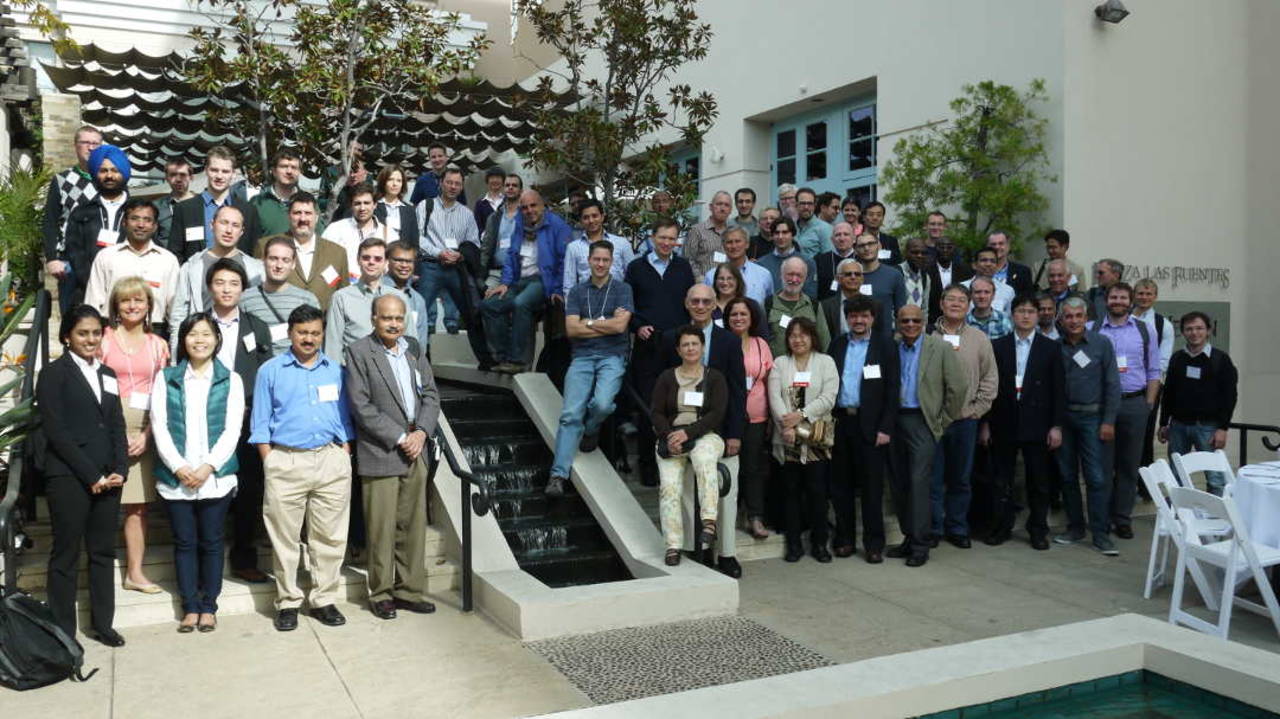
ISSRE 2013 Attendees
Computer Science Assistant Professor Gursimran WaIia attended the 24th IEEE International Symposium on Software Reliability Engineering in Pasadena, CA and won two best paper awards!
BEST RESEARCH PAPER AWARD for the paper, Goswami, A., Walia, G. "An Empirical Study of the Effect of Learning Styles on the Faults found During the Software Inspection" Proceedings of the 24th IEEE International Symposium on Software Reliability Engineering - ISSRE'2013, Research Track. Pasadena, CA, USA. [Acceptance Rate = 35% (46/131)]
Goswami, A. is a Ph.D student working under the direction of Dr. Gursimran Walia at North Dakota State University
BEST INDUSTRY PAPER AWARD for the paper, Walia, G., Carver, J. "Using Capture-Recapture Models for Make Objective Post-Inspection Decisions" Proceedings of the 24th IEEE International Symposium on Software Reliability Engineering - ISSRE'2013, Industry Track. Pasadena, CA, USA. [Acceptance Rate = 35% (46/131)]
Dr. Jeffrey C. Carver is a research collaborator and associate professor at the University of Alabama.
Congratulations, Dr Walia!
October 8, 2013
NDSU ACM Members teach PowerPoint to 4th Graders
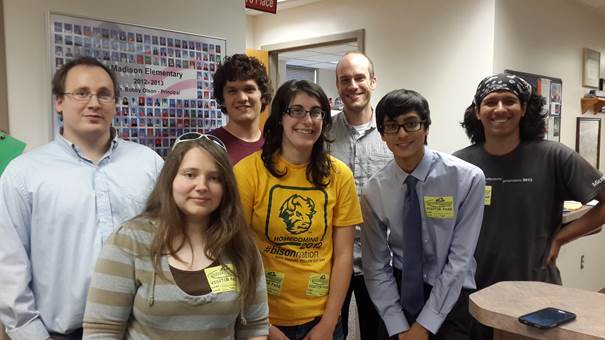
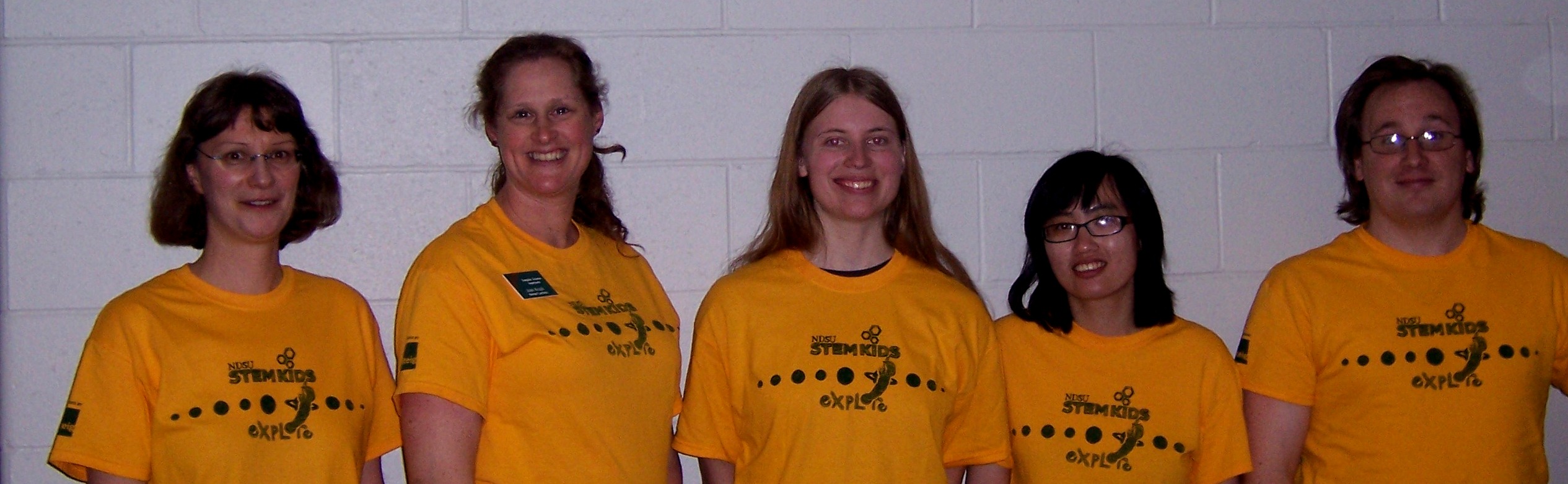
L to R: Matti Kariluoma, Alysia Christensen, Nate Spanier,
Brooke Billadeau, Kevin Bauer, Josh Tan, and Cesar Ramirez
NDSU ACM members went to Madison Elementary School in Fargo to teach PowerPoint to 4th Graders on September 25.
It was the first time members of ACM has taught PowerPoint in a school. They will be teaching again the end of October, November, and possibly December.
September 4, 2013
Congratulations Dr Yan!
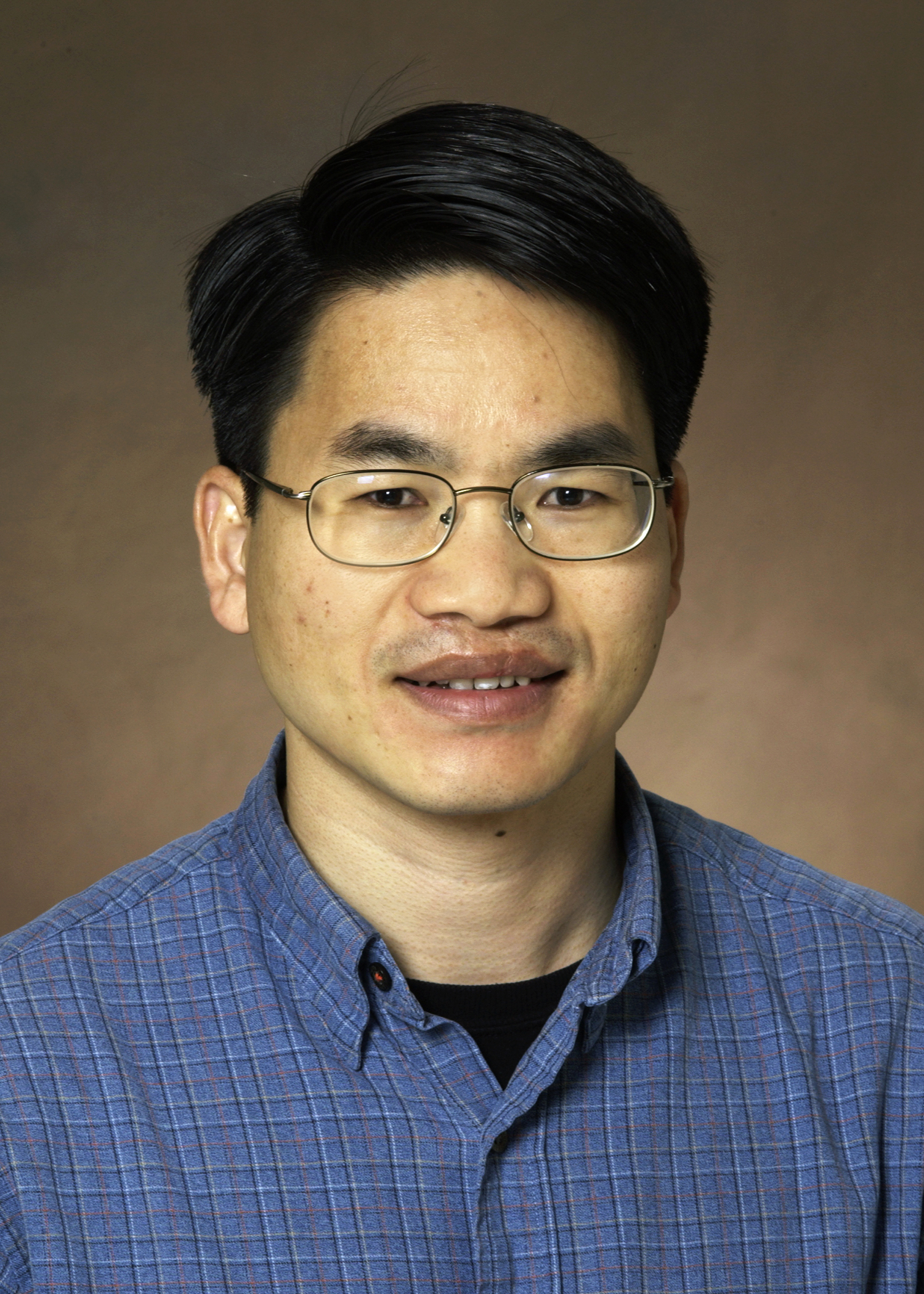
Dr. Changhui Yan
- ABI-Innovation: Computational Methods for Macromolecular Binding Analysis
Funding agency: National Science Foundation
PI: Dr. Changhui Yan
Sponsored period: 8/1/2013-7/31/2016
Total Award: $301,702
Project Abstract: In this project Dr. Yan develops computational methods for automated discovery of structural and physical-chemical elements contributing to the affinity and specificity of macromolecular binding. To achieve this goal, Dr. Yan develops graph models for the representation of protein structures and graph kernel-based machine-learning methods for the analysis and prediction of binding sites. The proposed graph models provide a succinct data structure to encode a range of structural and physical properties germane to molecular interactions. Dr. Yan uses an innovative graph-kernel-based approach to investigate the modular organization of binding sites and discover characteristic patterns associated with the modules.
- II-NEW: ABC.A Biology Cloud.
Funding agency: National Science Foundation
PI: Dr. Changhui Yan. Co-PIs: Dr. Anne Denton, Dr. Christopher Colbert, and Dr. Sangita Sinha.
Sponsored Period: 9/1/2013-8/31/2016
Total Award: $314,774
Project Abstract: The ongoing revolution in next generation sequencing (NGS) technologies and large-scale structural genomics projects has led to dramatic increase in genomic sequences and protein structures. This has brought biological research into a data-driven era, where computational methods and facilities are needed for handling and analyzing the huge volumes of data. In this project, the PIs develop a cloud computing infrastructure called A Biology Cloud (ABC) to support research in the areas of bioinformatics and computational biology. ABC is built based on the OpenStack, which is supported by more than 180 large companies and has quickly become the standard for cloud infrastructure. ABC will enable researchers at North Dakota State University (NDSU) to conduct pioneering research in their respective fields and promote and facilitate cross-disciplinary collaborations among them.
Perrizo progress at Treeminer Inc. where his patents are being implemented.
Technology Licensing UpdatesThe term "Big Data" is used by Treeminer, Inc. to represent the challenge of analyzing ever increasing volumes of data with limited computer resources. Treeminer is meeting that challenge with the patented data mining technology package it licensed from the NDSU Research Foundation back in 2011. In the past year, Treeminer successfully introduced this award winning Vertical Data Mining technology developed at NDSU by Dr. William Perrizo. The crux of this technology is that it organizes data in thin vertical strips rather than horizontally. By organizing data vertically and then compressing it into a patented data structure called a pTree (predicate tree), dramatic reductions in analysis times can be gained over existing methods. Treeminer's initial product using this technology, vMiner, has been completed and is currently in trial with several commercial customers. vMiner has demonstrated clear and significant performance advantages for the analysis of structured data such as database or spreadsheets and images, as well as unstructured data, such as text documents. Treeminer.s product literally takes analysis tasks that could take hours or days to complete and does them in minutes.
Over the past year, Treeminer made its first sale to a public sector customer, and they are expecting additional revenue from that sector this year. Treeminer.s value proposition is simple. The world will collect more data this year than in the entirety of human existence combined! This data, if harvested, can provide unprecedented benefits. To commercial organizations, this data represents both revenue and productivity opportunities. To medical firms, this data will help in seeking cures for diseases. To public sector customers, it will help analyze data, so that they can provide more efficient services to its citizens. Treeminer is using this Vertical Data Mining technology to revolutionize the data mining market, doing in minutes what currently takes hours or days, thus potentially benefiting us all. "We are finding that the technology developed at NDSU is relevant to the problems facing large organizations overwhelmed with data analysis" said Mark Silverman, CEO. "While we still have work to do to establish our technology in the market, we are extremely pleased with the progress we.ve made to date, and the opportunities in front of us."
June 2013
STEM Kids Camp
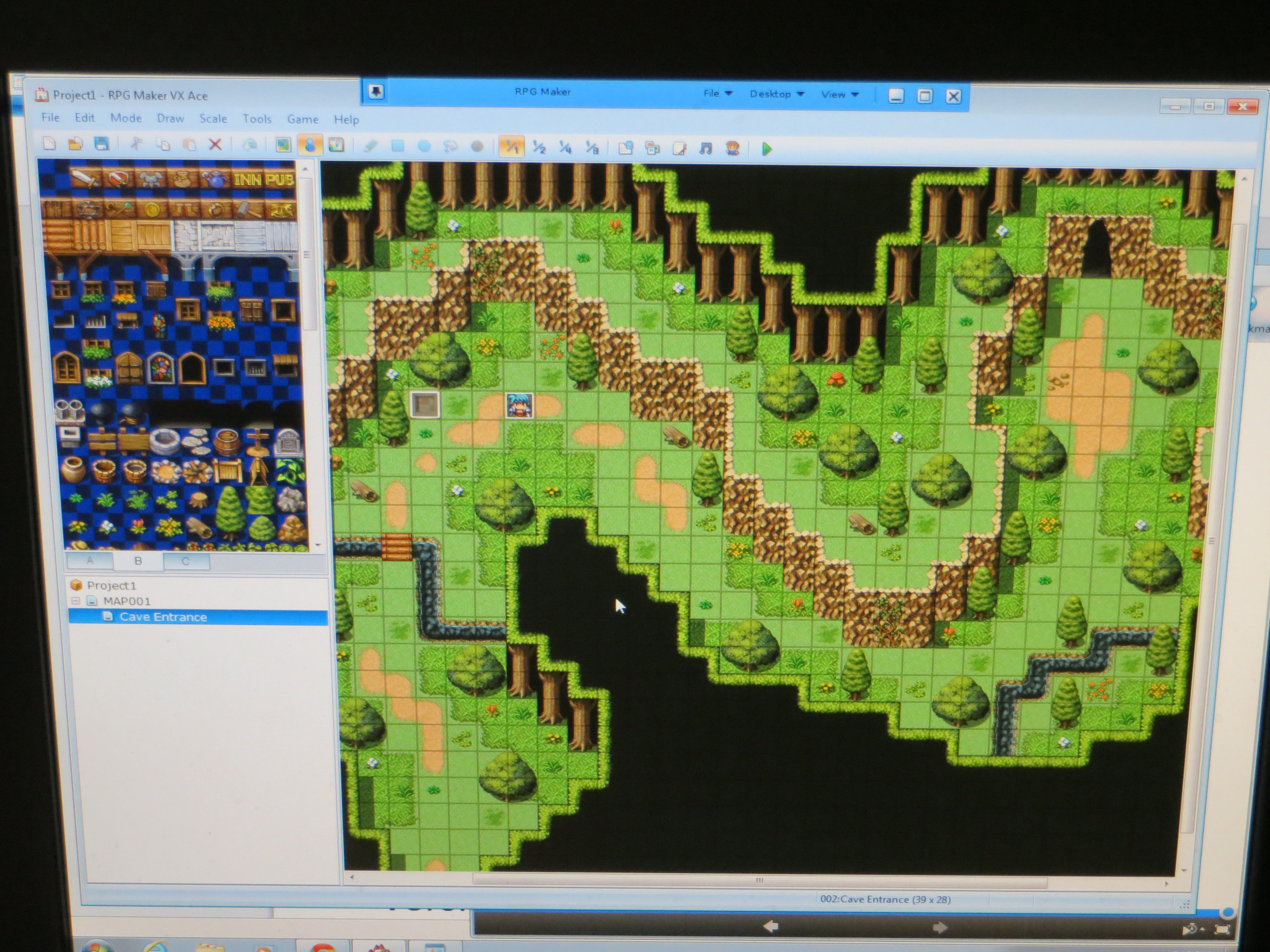
Screenshot of RPG Maker,
an application used during the camp.
Simone Ludwig, Joan Krush, Tanya Bitzan
Min Chen, Matti Kariluoma
A Computing and Games workshop was held as part of the STEM kids summer camp 2013 during June 10-13. The NDSU STARS (Students in Technology, Academics, Research and Service) group introduced 5th-8th graders to computing, problem solving, and games. Scratch and RPG maker were used to build interactive stories and games.
March 2013
Computer science professor named Jefferson Science Fellow
Kendall Nygard, professor of computer science and operations research, has been selected as a Jefferson Science Fellow for 2013-14.
He was notified of the prestigious appointment by the U.S. Department of State March 25.
Jefferson Science Fellows serve as science advisers on foreign policy issues. Appointees spend one year at the State Department or the U.S Agency for International Development in Washington, D.C., and also may have extended stays at U.S. foreign embassies or missions.
This year, 13 academic scientists, engineers and physicians from institutions of higher education were selected for the important positions.
"There are so many important policy issues for which the U.S. Department of State is responsible that are grounded in scientific and engineering areas in which I have an interest, including such things as energy, environment, security, arms control and the expanding role of communication and social media in shaping societies. I am very enthused about the opportunity and the trust placed in me to serve as a science adviser on such matters," Nygard said. "I officially begin my work on Aug. 19 and will work from Washington, D.C., for one year. Following the upcoming year, I will return to NDSU and be available for an additional five years on a consultant basis."
The fellowship program was initiated in 2003, designed to engage American science, technology, engineering and medical experts from academia in the development and implementation of U.S. foreign policy.
"By any major research university measure, this is an outstanding recognition of Dr. Nygard's nationally respected expertise, and it is a strong acknowledgment of the quality of our NDSU faculty," said NDSU President Dean L. Bresciani. "He will be an outstanding science adviser as our nation sets critical foreign policy."
NDSU Provost Bruce Rafert praised his distinguished record of teaching, research and service. "He is one of NDSU's very best," Rafert said. "His work spans a remarkably broad range of topics, from simulation to logistics, and artificial intelligence to distance education, and Petri Nets to software engineering. He has earned distinction by the breadth of thesis topics he has supervised and the range of graduate students he has seen through to graduation."
Nygard is one of two NDSU faculty members to be selected for the post. He joins Kalidas Shetty, associate vice president for global outreach and professor of plant sciences, who was a fellow in 2004.
"Jefferson Science Fellows provide our diplomats the scientific advice, rationales and tools to nderstand complex issues ranging from telecommunication technologies to food safety to biosecurity," Shetty explained. "It is a great honor for Dr. Nygard and NDSU that he is among the select few chosen to serve as an adviser to help our diplomats navigate complex challenges to make our world better for all its citizens. I am thrilled Ken has been chosen; he fully deserves this honor."
Nygard joined the NDSU faculty in 1977, and served as the computer science department chair from 1996 to 2005. In 1994-95, he was director of the Scientific Computing Center at the University of North Dakota, Grand Forks. He previously was a visiting scientist at the Air Force Logistics Command at Wright-Patterson Air Force Base in Ohio and a research fellow at the Air Vehicle Directorate of the Air Force Research Lab.
Nygard's research interests include combinatorial optimization methods involving management of networks and sensor networks, cooperative mission control for unmanned air vehicles, and bioinformatics.
He earned his bachelor's degree at Minnesota State University Moorhead, his master's degree in mathematics from Mankato State University and his doctorate in operations research from Virginia Polytechnic Institute and State University.
Ludwig hosting IEEE
The 5th World Congress on Nature and Biologically Inspired Computing (NaBIC2013) will be held August 12-14, 2013 at NDSU in the Memorial Union.
NaBIC2013 is organized to provide a forum for researchers, engineers, and students from all over the world, to discuss the state-of-the-art in machine intelligence, and address various issues on building up human friendly machines by learning from nature. The conference theme is "Nurturing Intelligent Computing Towards Advancement of Machine Intelligence".
All accepted and registered papers will be included in the conference proceedings to be published by the IEEE.
The event is hosted by Simone Ludwig, NDSU Computer Science and Ajith Abraham NaBIC 2013 General Chairs.
November 3rd, 2012
NDSU Hosts Regional ACM Competition
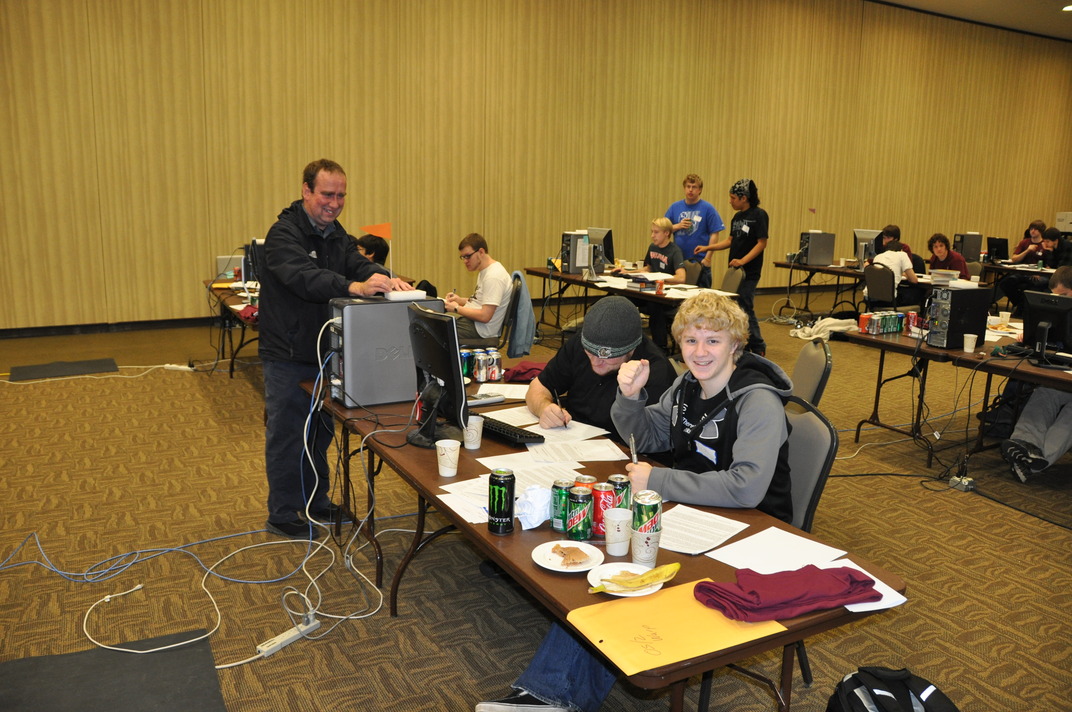
Victory!
NDSU's Computer Science department hosted a site for the North Central North America Region of the Association of Computing Machinery International Collegiate Programming Contest on November 3rd, 2012. NDSU is one of many host sites in the region, spanning from Manitoba down to Kansas. The University of North Dakota, Minnesota State Univerity Moorhead, and Concordia sent teams to the site to compete, with twelve teams overall.
Students compete in a team of three to try and write programs to solve problems. Teams have five hours to complete as many as possible in programming languages Java, C, or C++.
NDSU Team 'Drop Table Teams;-- received first place honors at the site, with three of the nine problems solved correctly. 'Drop Table Teams;-- consisted of Davin Loegering, Michael Nelson, and Nathan Spanier. Teams from UND took second and third place honors.
This is the third year that NDSU has hosted a site. A photo gallery of the event can be found online, along with the problem set. You can also find the Regional Scoreboard online here.
October 19, 2012
NDSU Team places 3rd at annual Digikey Competition
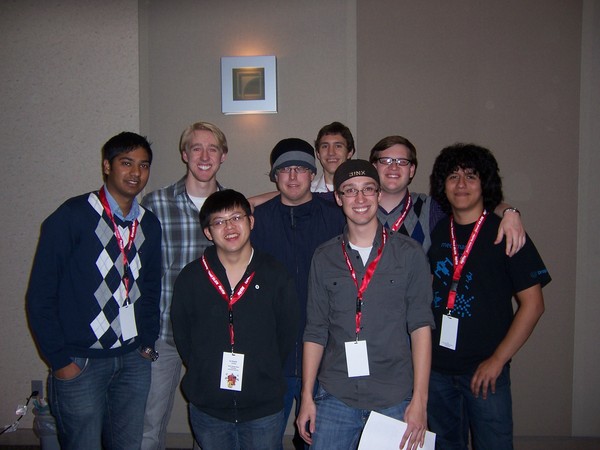
The Digikey Team!
On Friday, October 19th 2012, two teams of four students from NDSU's Computer Science department competed at the annual Digikey Collegiate Computing Competition held at the Digikey corporate headquarters in Thief River Falls, Minnesota. Twelve universities from the region came to compete.
This competition tests Mathematics, computer programming, and problem solving skills in three separate sessions. This year, NDSU's team Pi Rho received third place, earning each team member a $100 gift card and the Computer Science department an award of $1000.
The team Pi Rho consisted of Zechariah Anderson, a Senior double majoring in Computer Science and Mathematics; Cesar Ramirez, a Senior majoring in Computer Science; Samuel Stutsman, a Junior majoring in Computer Science; and Justin Anderson, a Senior double majoring in Computer Science and Mathematics.
The team Dacodas ended up placing 11th place. Dacodas consisted of Cody Wass, a Senior double majoring in Computer Science and Mathematics; Joseph Ching, a Senior double majoring in Computer Science and Mathematics; Ankit Kumar, a Junior majoring in Computer Science, and Michael Teubner, a Senior majoring in Computer Science.
A full picture gallery of students and the event can be found here: Digikey Image Archive.
August 10, 2012
Richard Rummelt Obituary

Richard Rummelt
Richard Dale Rummelt passed away suddenly on August 10, 2012. Richard was born on September 30, 1956 in Greenville, Michigan to Herman (who preceded him in death) and Judith Rummelt.
He leaves behind his beloved wife, Li and son, Long. He is additionally survived by his mother, Judy and brother, Herman; nephews, Brent Rummelt, Nick Rummelt, and Ryan Rummelt; nieces, Teagan Rummelt, and twins, Samantha and Sydney Rummelt.
Richard received a Bachelors and Masters degrees in Computer Science and Software Engineering from Grand Valley State University. At the time of his death, he was completing his Ph.D. at North Dakota State University (NDSU).
Richard was a senior lecturer in the computer science department at NDSU and was looking forward to teaching his classes this fall. He will be missed by his current and former students who rated him one of the best teachers at the University.
August 2012
Faculty Granted Tenure, Receive Promotions

Dr. Jun Kong
Computer Science professor, Jun Kong, has been awarded tenure and promoted to associate professor. Tenure was granted by the State Board of Higher Education at its May 16 meeting. Promotions were recommended by NDSU Provost Bruce Rafert and approved by President Dean L. Bresciani. A promotion acknowledges faculty members for professional competence and service to NDSU.
New Hires for Fall 2012 Semester
Janet Olfert has joined the Computer Science department as a lecturer. She will be teaching COBOL Programming and Business Use of Computers.
Joseph Latimer has joined the Computer Science department as a lecturer. He will be teaching Computer Science Problem Solving and Computing Fundamentals.
Associate professor, Rui 'April' Dai has joined the Computer Science department and will be teaching Wireless Sensor Networks. Originally from Wuhan, China she received her Ph.D. from Georgia Institute of Technology in Atlanta, Georgia.
June 11, 2012
Award-winning mobile app helps Distance and Continuing Education students find courses, navigate campus
Information on courses offered by NDSU Distance and Continuing Education now can come directly to your iPhone or iPad. The new interactive mobile application, which has a variety of useful tools, has been recognized for excellence. The app received a 2012 Gold Addy Award in the Mobile Apps category from the American Advertising Federation of North Dakota.Created through a collaboration of Distance and Continuing Education staff and a student employee, it is the first app in North Dakota created by NDSU staff and students for a university or college in the state. Ludvik Herrera, new media coordinator for Distance and Continuing Education, led the project. "The app was designed for anyone interested in taking Distance and Continuing Education Courses - NDSU faculty, staff and students and NDSU visitors such as parents and prospective students," Herrera explained, noting the app is intended to be intuitive and easy to use. "It has many tools of benefit to everyone in the community, from an interactive campus map that can tell you directions to specific offices, to parking lots or bus shelters. It also has a Quick Response decoder/reader that can be of help now that QR tags are used on many publications and marketing pieces."
Student employee Saumya Singh is a graduate student studying computer science and made significant contributions to the project, making it a fine example of the outstanding creativity and quality of work offered by NDSU students. "Developing the app was a huge learning experience as it gave me insight into iPhone operating system development," she said. "I had to start everything from scratch, and finally coming up with the app, as it is today, was really satisfying."
"Getting an award for the very first app I developed feels great," Singh said, suggesting the app's easy-to-use design is what makes it stand out. "It was an elaborate procedure, taking days of brain-storming to figure out the actual presentation of the app and how to make it more usable to the targeted audience," she said. "The usability and the presentation of the app appealed to the judges, and we got the award for it." The app is free and can be downloaded at http://ndsu.me/dceapp.
May 2012
Fargo women find success in male-dominated field of research and technology
Fargo Forum, Thursday, May 31, 2012
FARGO - Jane Schuh always keeps a picture of her 5-year-old daughter in her office at North Dakota State University for inspiration. To the associate professor of microbiology, the little girl’s fearless cry says, “I am woman, hear me roar!”
Perhaps Samantha takes after her mother, a confident, outgoing asthma researcher and immunology professor. As a woman, Schuh is in the minority in her field. Yet she, along with fellow NDSU scientist Anne Denton, want girls to know research and technology isn’t just for men. Schuh says she’s encountered little gender-specific resistance in her career, and she’s grateful for those who helped make that possible. “I’m so thankful for the women who did what they had to do to be successful in science to blaze the trail for those of us who came after,” she says. Her interest in math, science and medicine started as a youth growing up in the tiny town of Sheldon, N.D.
Schuh’s father was a farmer and high school science teacher, and the majority of her nine siblings work in medical-related fields. The married Fargo mother of two always thought she’d be a doctor, but she credits a microbiology teacher for steering her toward research. “One day, she took me aside and said, ‘You know, I think you should go into microbiology. You could work for the CDC or something like that,’ ” Schuh says. She says research science fits her through and through, right down to her shoes – snake-print platform wedges on a recent Friday afternoon. “What I’m interested in is the questions,” she says.
In her work, Schuh focuses on finding asthma candidate genes or targets and studies what initiates the disease process early and shows up later. The AgriHealth Initiative she’s working on combines state resources with national programs to provide agriculture workers with health care, safety and disability. She’s also been instrumental in securing funding for new top-of-the-line equipment for the university. Now she helps guide her own students and provides them with opportunities to help further their own careers. “It’s probably the most rewarding thing that you do as a professor,” she says. This summer, three undergraduate students and three graduate students will be doing research in Schuh’s lab. “For an undergraduate student to be able to do research, really good, hands-on, finding-the-answers-to-problems research, is a fantastic opportunity,” she says.
Schuh, who also attended NDSU as an undergraduate and graduate student, received tenure last year and was named an assistant dean a few months ago.
She continues to learn from her students’ fresh perspectives and inquisitive minds.
“Even though most of my job is research, I’ve found that every time I teach the basic immunology class, I think of things in a new way that affects my research, too,” she says.
GET WITH THE PROGRAM
A couple buildings over from Schuh, Denton teaches classes such as bioinformatics and comparative programming languages. The associate professor of computer science says maybe 5 percent (at most) of her undergraduate students are women. “I find that really disappointing,” she says. “I don’t know where it comes from.” She says younger girls seem more open to math- and science-related fields but lose interest around middle school. “If girls stick with it, I think it’s a very good environment to be in,” Denton says. The Fargo woman encourages her own children as well as her classroom “kids” to learn programming.
Her 14-year-old son recently earned the guitar he wanted by completing a programming book. Now her 11-year-old daughter is building Web pages with her sights set on an e-reader. Denton, who grew up in Germany, started learning to program as a teenager. “I was lucky I was exposed to computers fairly early on,” she says. She originally went into physics – up to the Ph.D. level – but switched to computer science. In 2003, she completed a master’s in computer science and was hired at NDSU, where her husband also teaches. Why the change? In computer science, “it’s a lot easier to get jobs wherever you are or whatever your situation,” Denton says. However, it wasn’t as much of a switch as it may seem. “Even in physics, most of what I was doing was working with computers, programming computers,” she says.
Now she’s combining research and education to benefit her students. “Professors are the ones who, by definition, have to be at the cutting edge,” she says. Her data-driven work includes “smart farming” and plant genomics. Essentially, she makes mountains of data useful in real applications. She works with companies such as American Crystal Sugar, John Deere and RDO Equipment that rely on her findings. “They want to be really sure if I tell them something, they can make decisions based on it,” she says. During the summer, Denton gives students the opportunity to get real research experience.
Denton says there’s a misperception about technology jobs going abroad. “The reality is that in this area, people are desperately looking for people who can do programming,” she says. Even for those who aren’t interested in a career in IT, a programming background opens up so many doors, she says. Denton says she’s never regretted going into a male-dominated field. For her, it’s never been an issue. “If you can solve problems, you’ll get a job,” she says. “It’s as simple as that.”
May 4, 2012
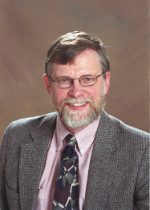
Nygard added to NDSU Tapestry of Talents
Dr. Kendall Nygard is one of the latest recipients of the campus recognition for the NDSU Tapestry of Diverse Talents. The Tapestry of Diverse Talents is a pictorial mosaic that recognizes students, faculty, staff and alumni for the diversity and contributions they bring to North Dakota State University. Each semester individuals are inducted into the Tapestry. Inductees reflect the ages, classes, abilities, ethnicities, genders, races, regional differences, sexual orientations, beliefs and values of the University community. The Tapestry program kindles the spirit to diversify diversity.Dr. Nygard has served on the NDSU Computer Science and Operations Research faculty since 1977. His research areas involve combinatorial optimization methods, with applications to management of networks and sensor networks, cooperative mission control for unmanned air vehicles (UAVs), computer-based transportation analysis, and bioinformatics.
April 25, 2012
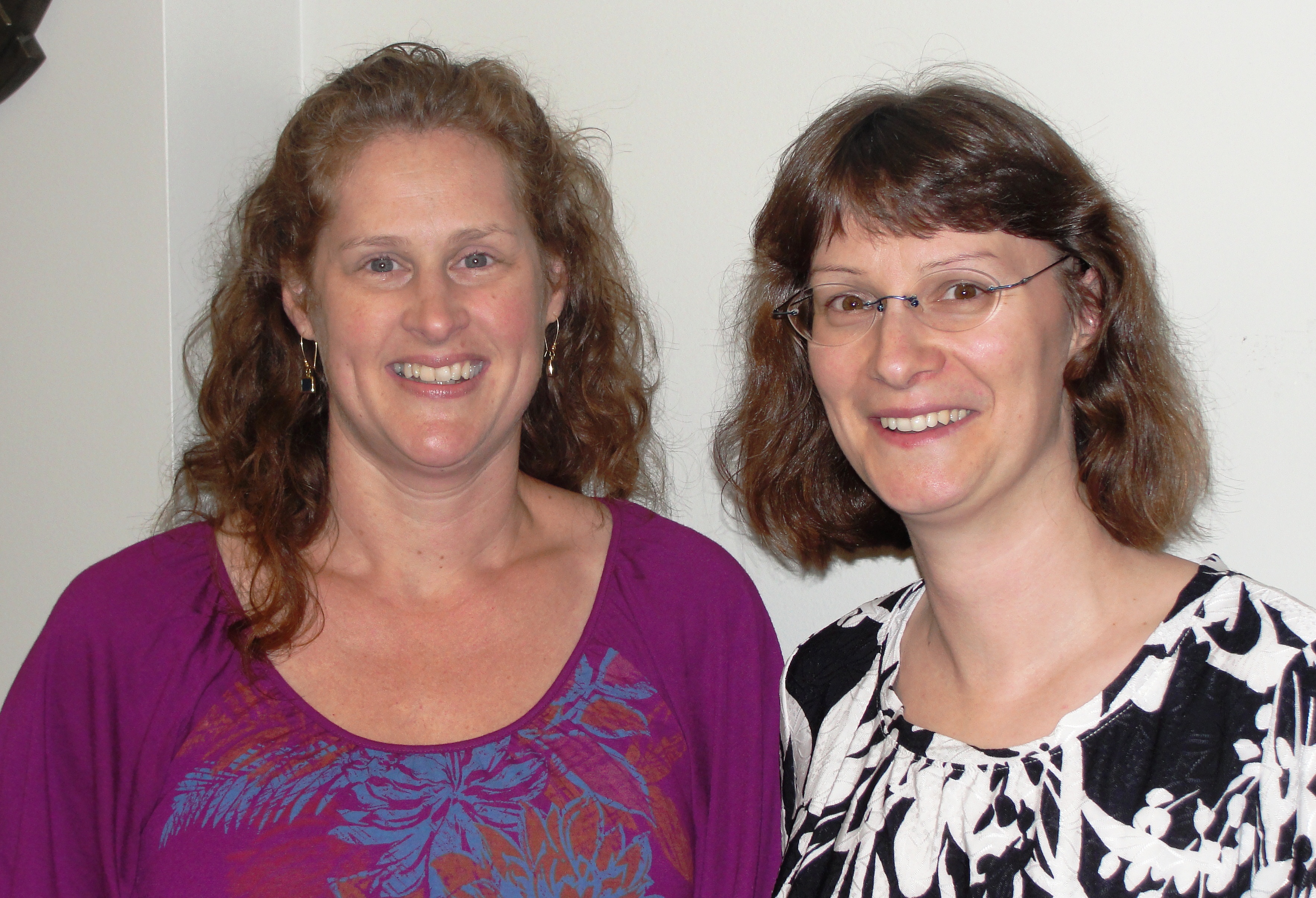
NDSU Computer Science Department selected as a STARS Alliance Member
The department was just awarded membership of the STARS (Students & Technology in Academia, Research & Service) Alliance for the 2012-2013 academic year. The mission of the STARS Alliance is to increase the participation of women, under-represented minorities, and persons with disabilities in computing disciplines through multi-faceted interventions. The STARS Alliance is a group of 20 colleges and universities and 88 regional partners. A few of the STARS Alliance activities include developing a STARS Leadership Corps (SLC) as a multi-year curricular program that catalyzes regional partnerships through the tiered participation of students, professionals, and educators in research and civic engagement and also to advance faculty through SLC participation and mentoring. Dr. Simone Ludwig, Associate Professor, and Joan Krush, Advisor/Lecturer, serve as academic liaisons for the STARS Alliance.April 2012
Goldwater Scholarship recipient named
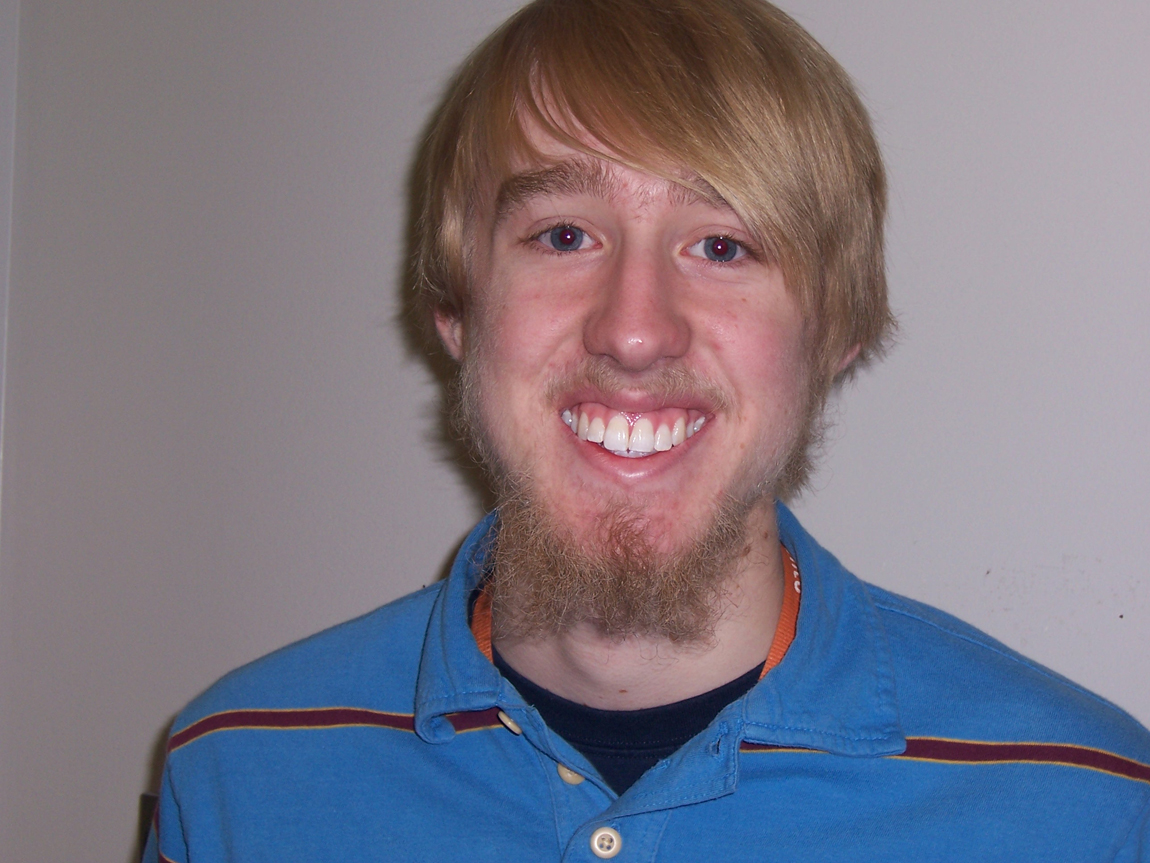
NDSU junior Zechariah Andersen is among 282 awardees nationwide selected for the prestigious Barry M. Goldwater Scholarships for the 2012-13 academic year. He is a Computer Science undergraduate student of Dr. Saeed Salem.
The scholarship is awarded annually to college sophomores and juniors and covers the cost of tuition, housing, fees and books up to $7,500 per year. Students are nominated by faculty members and selected through an independent review process. Andersen is the sole North Dakota University System student to receive the scholarship in 2012.
“I’m honored to receive this scholarship,” Andersen said. “The best feeling was seeing myself on a list of students from top-tier universities like MIT and Stanford.”
Andersen is a native of Velva, N.D., majoring in mathematics and computer science, with plans to pursue a graduate degree. He is vice chair of the NDSU Association for Computing Machinery.
Andersen also participates in the Ronald E. McNair Scholarship Program, which is intended to help undergraduate students achieve academic success and increase the number of professors from traditionally under-represented populations.
Established by Congress in 1986, the Barry M. Goldwater Scholarship and Excellence in Education Program was created to encourage outstanding students to pursue careers in mathematics, the natural sciences or engineering to foster excellence in those fields.
March 25, 2012
Dr Kendall Nygard Delivered Keynote Address
Dr. Kendall E. Nygard, Professor of Computer Science and Operations Research, delivered an invited keynote address at the InfoSys 2012 conference, held March 25-30 in St. Maarten, Netherlands, Antilles. The InfoSys conference is an annual series of four co-located conferences, including The International Conference on Networking and Services, The International Conference on Autonomic and Autonomous Systems, The International Conference of Resource Intensive Applications and Services, and The International Conference on Smart Grids, Green Communications and IT Energy-aware Technologies. The InfoSys Conference is sponsored by the International Academy, Research, and Industry Association (IARIA).Dr. Nygard's keynote address was entitled "Research Directions in Sensor Networks." In addition to the keynote address, he presented a session paper at the conference entitled "Decision Support Independence in a Smart Grid." The session paper is co-authored by graduate students Steve Bou Ghosn, Prakash Ranganathan, Md. Minhaz Chowdhury, Ryan McCulloch, Md. M. Khan, Anand Panday, and undergraduate student Davin Loegering.
March 24, 2012
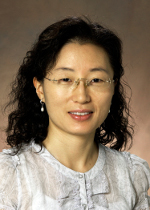
Assistant professor receives prestigious NSF CAREER Award
A major national grant received by an NDSU computer science assistant professor will be used to help develop more effective methods to test software, enhance computer science curriculum and provide opportunities for student researchers.Hyunsook Do, assistant professor of computer science, received a Faculty Early Career Development award from the National Science Foundation. Do will receive a five-year, $500,000 award from the foundation to conduct research outlined in her proposal, titled "Context-aware Regression Testing Techniques and Empirical Evaluations of Their Economic Impact." She is the first member of the computer science department at NDSU to receive a CAREER award.
When developers create, enhance and update software programs, regression analysis is used to find and fix bugs in the software code, a time-consuming process that is responsible for a significant percentage of software costs. Do's research program will lay a foundation to evaluate the cost-effectiveness of regression testing techniques and strategies in practical ways. The potential discoveries made by this research are expected to promote software dependability.
The research is expected to create cost-effective regression testing strategies to address the testing process and domain contexts; create regression testing strategies that address system lifetimes; create economic models that enable the adequate assessment of techniques and strategies; and evaluate and refine these techniques and strategies through rigorous empirical approaches. Do notes that while some progress in this area of research has been achieved, three important aspects of the regression testing problem have not been considered. "Most regression testing research has focused on creating new techniques, and very little work has considered factors involving the context in which testing occurs," said Do, "but context factors are very important in practical testing situations for identifying and assessing appropriate regression testing techniques." In addition, most research has taken a snapshot view of regression testing, using an approach centering on single systems versions. "This approach, however, ignores the fact that regression testing is performed repeatedly across a system's lifetime, and techniques may exhibit different cost-benefit tradeoffs when assessed across entire system lifetimes than when assessed relative to individual versions." According to Do, most empirical evaluations of regression testing techniques have relied on limited metrics and have not considered the economic impact of the techniques. "To properly assess regression testing techniques and strategies in terms of economic benefits, we need economic models that capture important cost factors and quantify benefits."
Graduate and undergraduate students will be involved in Do's research and will focus on two common application domains that require different testing processes: large-scale industrial applications and Web applications that require frequent patches. The overall goal of the research is to develop more effective regression testing techniques for the software industry and foster additional research in the field. Do also will use the CAREER award to enhance current graduate course curriculum and to develop a new graduate course on software testing and its economic implications. "Most important overall, the discoveries my students and I make will promote software dependability, with potential benefits to organizations and persons who depend on that software," Do said.
"Dr. Hyunsook Do provides a great example of successful work/life balance in a discipline, computer science, not known for being exceeding hospitable toward women. She has attained one of the highest honors in her profession. Dr. Do is an absolutely solid role model for young academics and especially young women. We commend her on her achievements," said Brian Slator, chair of the computer science department.
"Dr. Do is leading the way for a superb group of young investigators in a very strong computer science department," said Kevin McCaul, dean of the College of Science and Mathematics. Since 1996, 16 faculty members at NDSU have received prestigious National Science Foundation CAREER awards. "NDSU researchers continue a standard of excellence that reflect the institution's ability to attract the best and the brightest among new faculty researchers," said Philip Boudjouk, vice president for research, creative activities and technology transfer.
Overall, National Science Foundation CAREER awardees at NDSU have received more than $6.8 million in grants to conduct research in biology, chemistry, civil and electrical engineering, computer science, pharmaceutical sciences, and coatings and polymeric materials. NSF CAREER awardees currently at NDSU include faculty members Gregory Cook, Seth Rasmussen, Wenfang Sun, Sivaguru Jayaraman and Uwe Burghaus in chemistry and biochemistry; Sanku Mallik in pharmaceutical sciences; Magdy Abdelrahman, Xuefeng Chu, Kalpana Katti and Eakalak Khan in civil engineering; Kendra Greenlee in biological sciences; and Do in computer science.
March 7, 2012
Helsene Receives Campus Kudos Award
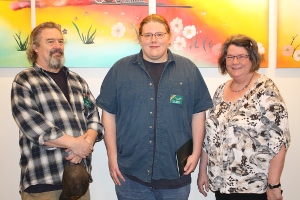
Adam Helsene, Systems administrator of the computer science department, received the NDSU Campus Kudos Award on March 7, 2012. Nancy Lilleberg, Information Technologies Service, read the nomination she submitted for Adam. Dr. Brian Slator was also present to participate in the award. Campus Kudos is a certificate of appreciation for anyone on campus including students, staff, and faculty (all-inclusive). The certificate is issued as a heart-felt thanks for contributions to campus and the people on campus. Staff Senate sponsors this program to encourage NDSU employees to recognize co-workers when they exhibit one or more of the following valued behaviors:
- 1. Customer Service
- 2. Continuous Improvement
- 3. Teamwork
- 4. Integrity
- 5. Quality
Campus Kudos recipients receive a coffee cart gift certificate, which may be redeemed at either the Minard Hall or Memorial Union Coffee Carts. The NDSU Bookstore also recognizes Campus Kudos recipients with a $10 gift certificate to the NDSU Bookstore.
February 22, 2012
Computer science capstone course goes international
Student teams in the NDSU Computer Science Capstone Projects course have developed more than 100 real-world industry sponsored projects for regional companies since 2004, covering everything from Web apps to cell phone apps to cloud computing to robotics to prototyping new development systems for sponsors. These companies have been local, such as Microsoft, Phoenix International and Blue Cross Blue Shield of North Dakota, as well as regional companies, like IBM, Polaris, Rockwell Collins and National Information Solutions Cooperative. In addition to learning how to work remotely with sponsors, students have been on teams with students from other countries. But until now they have not had the opportunity to work directly with companies in other countries.Since international development projects are becoming common in industries, it is deemed to be beneficial for students to gain this experience. At the beginning of this semester, the Capstone Projects course started including international capstone projects where students work from NDSU, but their sponsoring companies are international.
One NDSU student team is working for COMbridge in Hannover, Germany, and a second NDSU team is working for Syntronic in Linkoping, Sweden. At the same time, a student team from Linkoping University is working on a project for Polaris in the Minneapolis region, while a second team from Fachhochschule Hannover is working on a project for National Information Solutions Cooperative in Mandan, N.D.
Establishing these international connections has taken a few years to develop. The capstone instructor, Dean Knudson, met a German professor from Fachhochschule Hannover and a Swedish professor from Linkoping University at different conferences in recent years. In discussing what each was doing for their capstone projects, the concept of an exchange of student projects was developed. The idea was that a team from NDSU would do a project for a company in Germany while a team of German students would do a project for a company in the United States. Two of the current 13 NDSU capstone teams, consisting of three to five students each, are involved.
February 22, 2012
FORWARD announces mentor travel grant awards
Twenty-four faculty have been awarded Mentor Relationship Travel Grants through the FORWARD project. The grants offset the costs of meeting with mentors from outside NDSU to build long-term professional mentoring relationships. Some grants are used by NDSU faculty to travel to meet with mentors, and others are used to bring a mentor to NDSU.Donna Grandbois, assistant professor of nursing, will use her funding to take part in the third annual Health Equity Leadership Institute: Building Collaborative Research Teams, facilitated by her mentor, Jared Jobe, former program manager at the National Institutes of Health. Jobe is a founding member of the National Institutes of Health's American Indian-Alaska Native Employee Council and the institute's Community-Based Participatory Research Scientific Interest Group. The institute is an intensive weeklong "research boot camp" focused on helping investigators, particularly investigators from underrepresented populations, engage in health equity research to achieve research funding through the National Institutes of Health.
With her funding, Simone Ludwig, associate professor of computer science, will meet this summer with her mentor, Wolfgang Banzhaf, professor of computer science at Memorial University of Newfoundland, Canada, a leading authority in the field of genetic programming and evolutionary computation. Banzhaf and Ludwig will develop steps to advance her career and her research program in evolutionary computation and swarm intelligence.
Elizabeth Birmingham and Amy Rupiper Taggart, associate professor of English, will use their funding to travel to Philadelphia in May to participate in the 2012 Rhetoric Society of America Career Retreat for Associate Professors in conjunction with the society's conference. At the retreat, Birmingham and Taggart will work with senior members of the society serving as career mentors to analyze their current curriculum vita and develop an action plan to achieve promotion to full professor. This opportunity also will enhance the peer mentoring Rupiper Taggart and Birmingham engage in through NDSU FORWARD's mid-career mentoring program.
Other recipients for Mentor Relationship Travel Grants for 2011-12 include Senay Simsek and Kim Vonnahme from the College of Agriculture, Food Systems, and Natural Resources; Kjersten Nelson, Amy O'Connor, Kathryn Samuels, Courtney Waid-Lindberg and Christina Weber from the College of Arts, Humanities and Social Science; Rajani Pillai from the College of Business; Stevie Famulari, Sumathy Krishnan, Annie Tangpong, Joan Vonderbruggen and Yechun Wang from the College of Engineering and Architecture; Kristen Benson, Elizabeth Erichsen, Jooyeon Ha, Christi McGeorge and Sherri Stastny from the College of Human Development and Education; and Hyunsook Do and Juan Li from the College of Science and Mathematics.

January 17, 2012
Researchers develop disaster management system
Juan Li, assistant professor of computer science, and Samee U. Khan, assistant professor of electrical and computer engineering, have developed an elaborate cloud computing based disaster management system."Natural and manmade disasters require an effective and efficient management of massive amounts of data and coordination of wide varieties of people and organizations. This is where our system comes into play," Li said.
The system core is a web-based social network server that provides a platform to enable users (workers, first-responders, local disaster related non-profit organizations, volunteers and local residents) to access information, communicate and collaborate, in real-time from all types of computing devices, including mobile handheld devices, such as smart phones, PDAs and iPads.
"Our system provides a community-based, effective and self-scalable cloud computing environment in which a diverse set of organizations and personnel can contribute their resources, such as data, knowledge, storage and computing platform to the cloud," Li said. "In this way, local communities, institutions/organizations and individuals can seamlessly interact with each other to achieve massive collaboration within the affected area."
Khan said the motivation to develop the system was to enable all of the local Fargo-Moorhead area residents to become first-responders by providing firsthand, valuable and timely information to the local, state and federal governments, if a calamity, such as the 2009 flood, ever happened again. Khan witnessed massive destruction due to floods in his native country, Pakistan, and he wants the local community to have all of the tools available to fight such natural disasters.
The system was first presented to the research community at the International Conference on System of Systems Engineering, Albuquerque, N.M., in June 2011. Since then, the system has undergone further advancements, such as automatic information integration and improved interoperability between different information sources.
October 2011
NDSU student team takes second place at ‘MechMania’ competition
The NDSU student chapter of the Association for Computing Machinery (NDSU ACM) recently took second place in a national programming competition. The group participated in “MechMania” at the annual “Reflections | Projections” ACM conference held at the University of Illinois at Urbana-Champaign on Oct. 7-9.
MechMania is a 24-hour artificial intelligence programming competition of which the NDSU ACM has been a perennial competitor. The contest is an outstanding learn-by-doing experience that prepares competitors for the deadline pressures of the workplace.
This year, MechMania teams developed artificial intelligence players for “Thrust Wars,” a game in which players must control their fleet of “Asteroids” style space ships and score points by gathering resources, building ships, refineries and bases while battling or destroying the other team’s ships, refineries and bases.
NDSU’s PiRho team of students Zechariah Andersen, Benjamin Bechtold and Justin Anderson took second place in a photo finish to a team from UIUC.
“The MechMania competition gave us good insight on how to rapidly develop software efficiently,” said Andersen, a junior from Velva, N.D. Bechtold, a senior from Velva, N.D., described the experience as a great way to get ready for upcoming career challenges. “This competition helped me prepare for the job market,” he said. “I was able to collaborate with a team to solve problems and implement solutions.”
For Anderson, a senior from Frazee, Minn., the competition held important lessons. “Rome wasn't built in a day, nor was it built by one person. Working with Zech and Ben at MechMania taught me that teamwork is crucial for success, especially when time is a big factor,” he said.
Team members received an Amazon Kindle along with 100GB of space from Dropbox for life as prizes for placing second.
The team was sponsored, in part, by the NDSU Department of Computer Science.
For more details on NDSU ACM events, visit www.acm.ndsu.nodak.edu.
September 15, 2011
Interactive device research, media effects lab effort receive funding
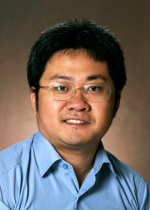
Dr. Jun Kong
The National Science Foundation has presented a $300,000 grant to NDSU to develop new interfaces for interactive devices such as smart phones and tablets and start building a media effects lab to benefit social scientific work at the university.
The project, titled "MRI: Development of a Cross-Platform Infrastructure for Natural Interaction Research," is led by principal investigator Jun Kong, assistant professor of computer science. Co-principal investigators are Nan Yu, assistant professor of communication; Jing Shi, associate professor of industrial and manufacturing engineering; and John Cook, interim chair/head of industrial and manufacturing engineering.
"The primary objective of this proposal is to develop a cross-platform infrastructure that supports the research of natural interaction," said Kong. "This infrastructure, when applying to different computing and communication devices, will provide a new way of human-computer interaction by automatically choosing the optimal modalities under various interaction scenarios. It provides the necessary instruments for developing novel interfaces, especially on newly released mobile devices."
According to Yu, the research group will build a media effects lab that allows NDSU scholars and students to investigate a variety of new technologies and media, and observe how users may interact with them.
"This grant will be used to carry out research on designing new interfaces for devices like smart phones or tablet PCs which may improve the interaction between users and electronic devices," Yu said. "Additionally, the grant allows us to examine the usability and effectiveness of these new designs and to understand how they could be modified to adjust to various needs in different interaction contexts. It is our hope that this grant can support the enhancement of creativities and innovations related to research on new interaction devices."
In a notification communication dated Sept. 9, John C. Robey, NSF grants and agreements officer, said the grant is effective Sept. 15 and expires on Aug. 31, 2014.
Ron Vetter gives ACM Distinguished Lecture
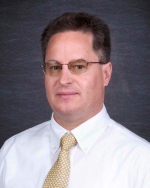
Dr. Ron Vetter
Ron Vetter gives ACM Distinguished Lecture 'Building Mobile Phone Applications'
On Wednesday, Sept. 14, at 2 p.m. Dr. Ron Vetter gave an ACM Distinguished Lecture in IACC 104. Vetter's talk described the development of interactive short message service applications, which range from simple data access applications to a novel discovery game designed for the freshman experience. Several of these applications are now being sold commercially via a novel technology transfer agreement with the University of North Carolina Wilmington. In addition, several iPhone applications also have been developed. A discussion of the relative advantages, costs and lessons learned while developing mobile phone applications was presented.
Dr. Vetter spent the day on campus, visiting faculty and students, and renewing old acquaintances. The lecture was well-attended.
The trip was sponsored by the national ACM speaker service, and the NDSU student chapter of the ACM. NDSU’s ACM invited the MIS student organization; the ECE student organization; the MSUM chapter of the ACM; as well as extending an informal invitation to the students of Concordia College. The CS department extended an open invitation to the Microsoft campus, which led to the involvement of Tim Brookins, Microsoft Distinguished Engineer, at an after-talk meeting with Vetter and a number of students, including the ACM SIG-Mobi group.
Dr. Vetter earned his bachelor's and master's degrees in computer science from NDSU and his doctorate in computer science from the University of Minnesota. He has published more than 100 journal, conference and technical papers. He has served as the principal investigator or co-principal investigator on grants and contracts exceeding $5 million dollars.
August 2011
Tech Girlz Rule
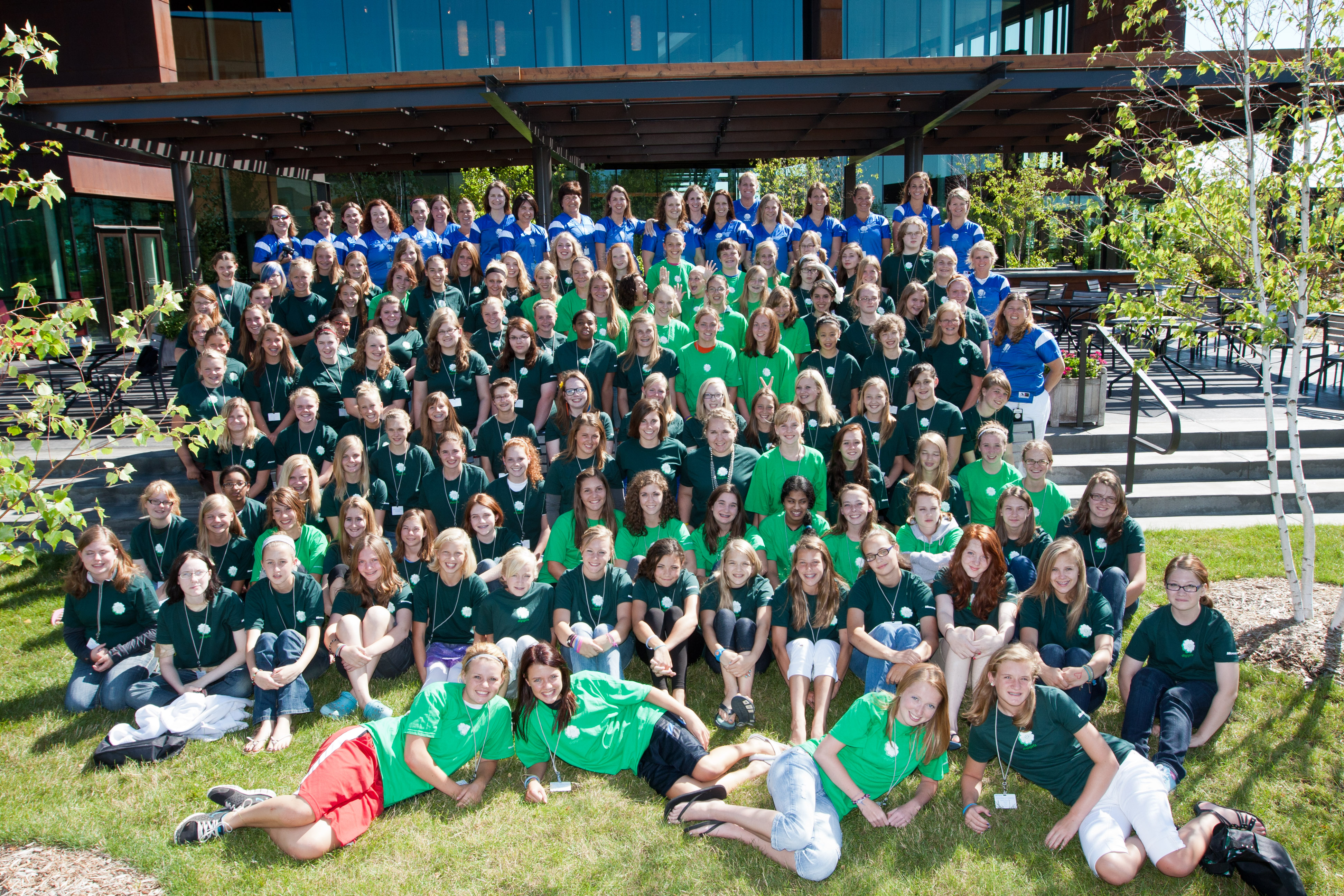
Photo courtesy of Microsoft.
Fargo's Microsoft campus hosted its fifth Digi-Girlz technology camp in August hosting 130 girls between 13-17 years old, making it one of the largest field camps in the country. The attendees came from five states — North Dakota, Minnesota, South Dakota, California and Nevada. Over 600 girls have attended the camp through the years in Fargo.
The purpose of the camp is to expose high school girls to the many careers technology can offer. Digi-Girlz offers hands-on experiences including Xbox game testing, Microsoft Studio broadcasting and product development and marketing. There are tours, workshops/panels and a keynote speaker. This year's keynote speaker was NDSU's Amy Ruley, who was inducted into the Women's Basketball Hall of Fame in 2004.
Why It Matters — according to the National Center for Women and Information Technology:
- Girls comprised 46% of Advanced Placement (AP) Calculus test-takers, but only 19% of AP Computer Science test-takers.
- Women hold 56% of all professional occupations in the U.S. workforce, but only 25% of IT occupations.
- Only 11% of executives at Fortune 500 tech companies are women.
- In 2009, just 18% of undergraduate Computing and Information Sciences degrees were awarded to women; in 1985, women earned 37% of these degrees.
- Tech companies with more women on their management teams have a 34% higher return on investment; the presence of women on technical teams increases teams’ collective intelligence (problem-solving ability and creativity).
About one in five undergraduate degrees in computing and information sciences are awarded to women — a figure that's been halved since the mid-80s.
From the Fargo Forum on Saturday, August 6, 2011, regarding women in technology and what the Computer Science department is doing:
"Brian Slator, head of the Department of Computer Science at North Dakota State University, said in an email that the dearth of women who pursue the field is sometimes called a 'vicious cycle': a shortage of female students leads in technical areas to a shortage of female faculty and role models, which further discourages female students from enrolling.
He said the department has made extra efforts to recruit and retain female faculty to buck the trend. Women currently hold five of the department's 14 full-time faculty positions."
July 2011
Wolfgang Banzhaf presented "From Artificial Evolution to Computational Evolution"
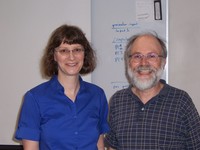
Dr. Simone Ludwig
Dr. Wolfgang Banzhaf
The July monthly seminar series featured Wolfgang Banzhaf, a University Research Professor at Memorial University of Newfoundland in St. John's, Canada. His presen$
May 2011
Anne Denton named James A. Meier Junior Professor
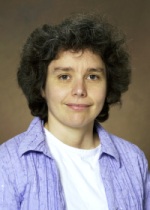
Dr. Anne Denton
Congratulations to Anne Denton on receiving the James A Meier Junior Professorship for the College of Science and Mathematics. The Meier Professorships are funded through the generosity of James A. Meier, a graduate of the College and North Dakota State University. The award winner carries the title, James A. Meier Junior Professor, plus receives $2500 for a three-year term (Fall semester 2011 through Spring semester 2014). The professor is referred to as a James A. Meier Junior Professor for life. It recognizes either an associate or assistant professor who has contributed to teaching through his or her research program.
Dr. Denton's research is largely comprised of developing data mining techniques for diverse problems ranging from bioinformatics to optical luminescence. As such her work balances the theoretical underpinnings of clustering algorithms to the applied discovery of gene and protein sequences.
As a consequence, in just a few years Anne Denton has published nearly 40 peer-reviewed journal and conference publications, and has participated in eight funded research grants: five internal and three external, four as PI. Equally impressive, these publications and grant awards represent at least five fundamentally different and highly varied research domains.
April 2011
Dean Knudson wins Peltier Award
Dr. Dean Knudson
Our congratulations go to Dean Knudson, associate professor of computer science, for receiving the Peltier Award for Teaching Innovation. Dean replaced Elvin Isgrig in 2004 as coordinator of the capstone program. Capstone projects pair students with industry and government to give them real life experiences. The students work in teams and use their technical knowledge on projects for their assigned business.
Dean estimates 250 students have participated in Capstone. He continues to take them to a higher level as he adds more companies and projects.
Brian Slator, professor and department head of computer science, says "Over the years, this course has been refined and expanded, following industry initiatives, and providing students with authentic 'learn-by-doing' experiences using modern tools and methods borrowed from the regional companies that sponsor the projects," Slator wrote. "Students do real projects for real companies, drawing on their NDSU course work and training in order to effectively learn company methods and tools."
To read the announcement, go to http://www.ndsu.edu/news/view/article/10873/. This website lists the previous Peltier award winners http://www.ndsufoundation.com/grantsawards/peltier.htm.
College of Science and Mathematics Honor's Day Celebration
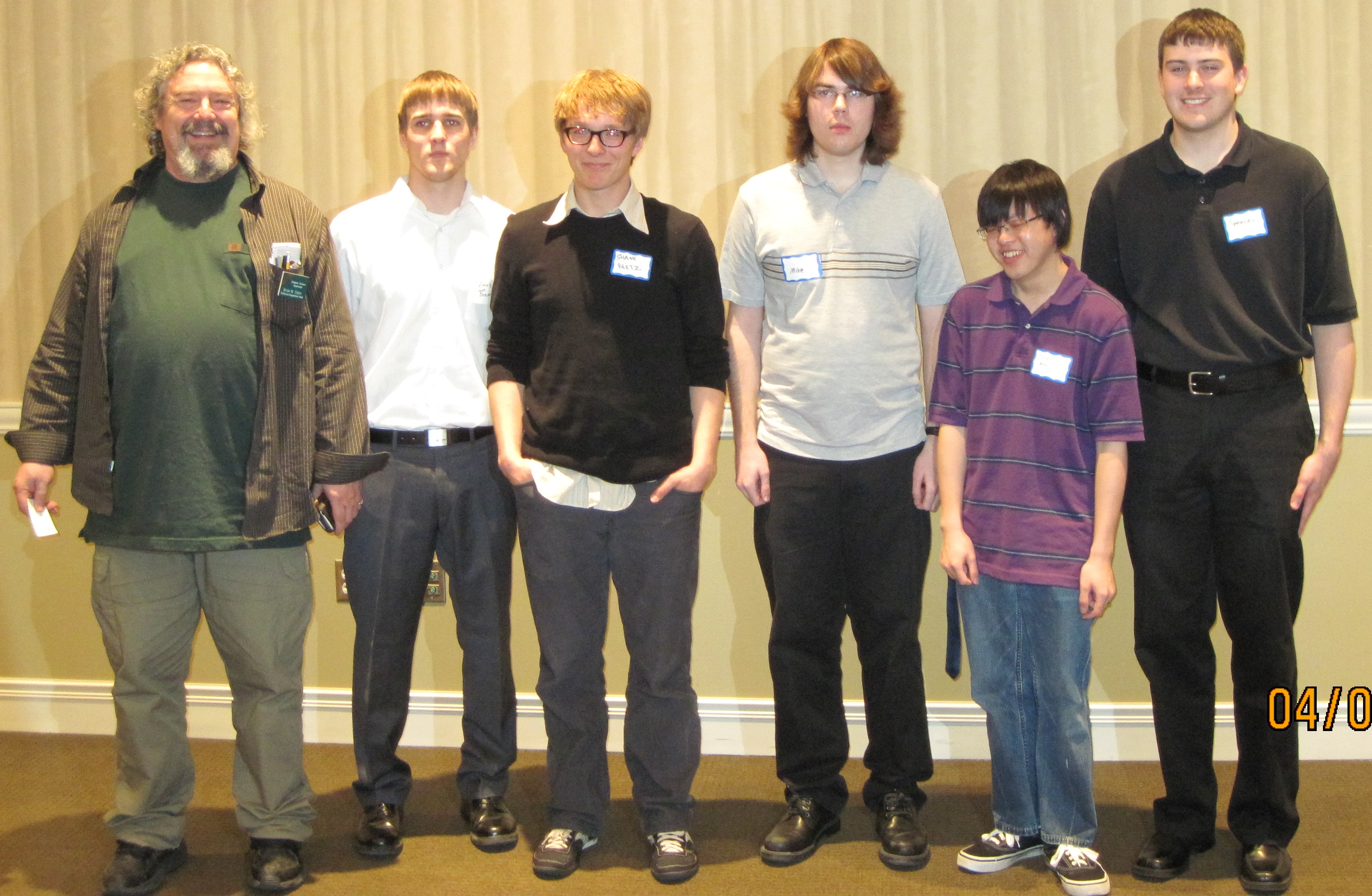
(l to r) Brian Slator, Department Head, Lucas Bremseth, Shane Reetz, Michael Delaney,
Joseph Ching, and Spencer Bliss (not pictured, Kenneth Iverson), photo by Annette Delaney.
The Honor's Day celebration held annually by the College of Science and Mathematics had a different format this year. The event was hosted by Dean Kevin McCaul as a coffee and dessert gathering rather than a luncheon, although the other aspects of the afternoon remained according to tradition.
The affair began with remarks by the Provost, followed by short statement from Michael Ginsbach of Hankinson, ND, who visited Antarctica on a recent expedition. Then the dessert line formed. After dessert, student awards were handed out. This was followed by a short presentation by Dr. Craig Stockwell on the subject of short term evolution titled "Evolution in Action".
For the Computer Science department, six students along with several parents, joined Dr. Brian Slator (department head) and Joan Krush (department advisor and lecturer). Names were called, and each student in attendance was introduced to the assembled crowd while receiving a certificate of achievement.
The Computer Science department awarded 5 Microsoft Undergraduate Scholarships as well as 18 awards through the Collaboration for Scholarships in Computer, Information Sciences and Engineering (CoCise) Program, a National Science Foundation grant program that ends after this year.
The ceremony was attended by a number of notable dignitaries, including NDSU Provost Dr. Craig Schnell, Vice President for Research Dr. Phil Boudjouk, Vice President for Student Affairs, Dr. Prakash Mathew, as well as representatives of donor families, and the NDSU Development Foundation.
February 2011
NDSU professsor's data software finds outlet
Original article by Marino Eccher, INFORUM, reprinted with permission
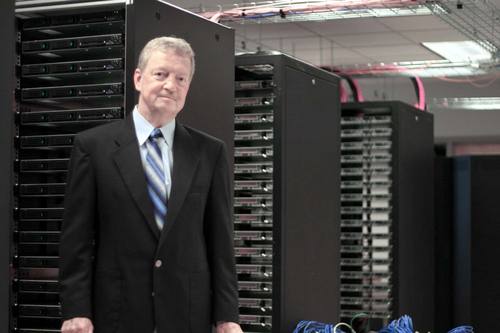
It’s a growing problem in the information age: How do you sort through ever-expanding troves of data to find meaningful patterns and needles in the digital haystack – especially when traditional analysis methods can’t keep pace with the explosion of available data? Bill Perrizo, a North Dakota State University computer science professor and researcher, has spent years developing a solution – one promising enough to attract an entrepreneur who turned the technology into a new business.
Businesses and government agencies are producing and storing more data than ever before, Perrizo said – from hospital records to photos of crop fields to images from defense satellites. But as the information piles up, traditional methods for analyzing data become increasingly ineffective because there’s too much data to manage.
Perrizo’s software essentially turns the problem on its head. Instead of combing through a spreadsheet cell by cell and row by row – a “horizontal” approach – it turns the data “sideways” and treats it as a series of vertical slices, shaving down search time and improving scalability.
Perrizo’s system was good enough to win the 2006 Knowledge Discovery in Data Cup, an annual completion that challenges participants to solve large-scale data-mining challenges. In that competition, Perrizo’s software was able to predict pulmonary embolisms from a huge set of human lung images about twice as effectively as the next competitor.
Perrizo says that kind of application for data mining and prediction has critical real-world consequences: If doctors confuse an embolism with an aneurysm or other condition because they misinterpret an image, the wrong treatment can be deadly.
Last year, representatives from NDSU’s Research Foundation, which is charged with helping university innovations find commercial outlets, got in touch with Mark Silverman, an East Coast technology entrepreneur. Silverman said the software stood out “as the right technology at the right time in the market.”
Silverman and NDSU recently announced a deal to license the technology to Silverman’s new company, Maryland-based Treeminer Inc. Silverman said he plans to bring the product to market later this year. He said government agencies are the biggest potential customer right now. Defense and intelligence, large-scale climate study and modeling, and agricultural modeling are all big potential applications, he said. “Wherever there’s a lot of data, there’s a lot of need,” he said.
Original article by Marino Eccher, INFORUM, reprinted with permission
November 2010
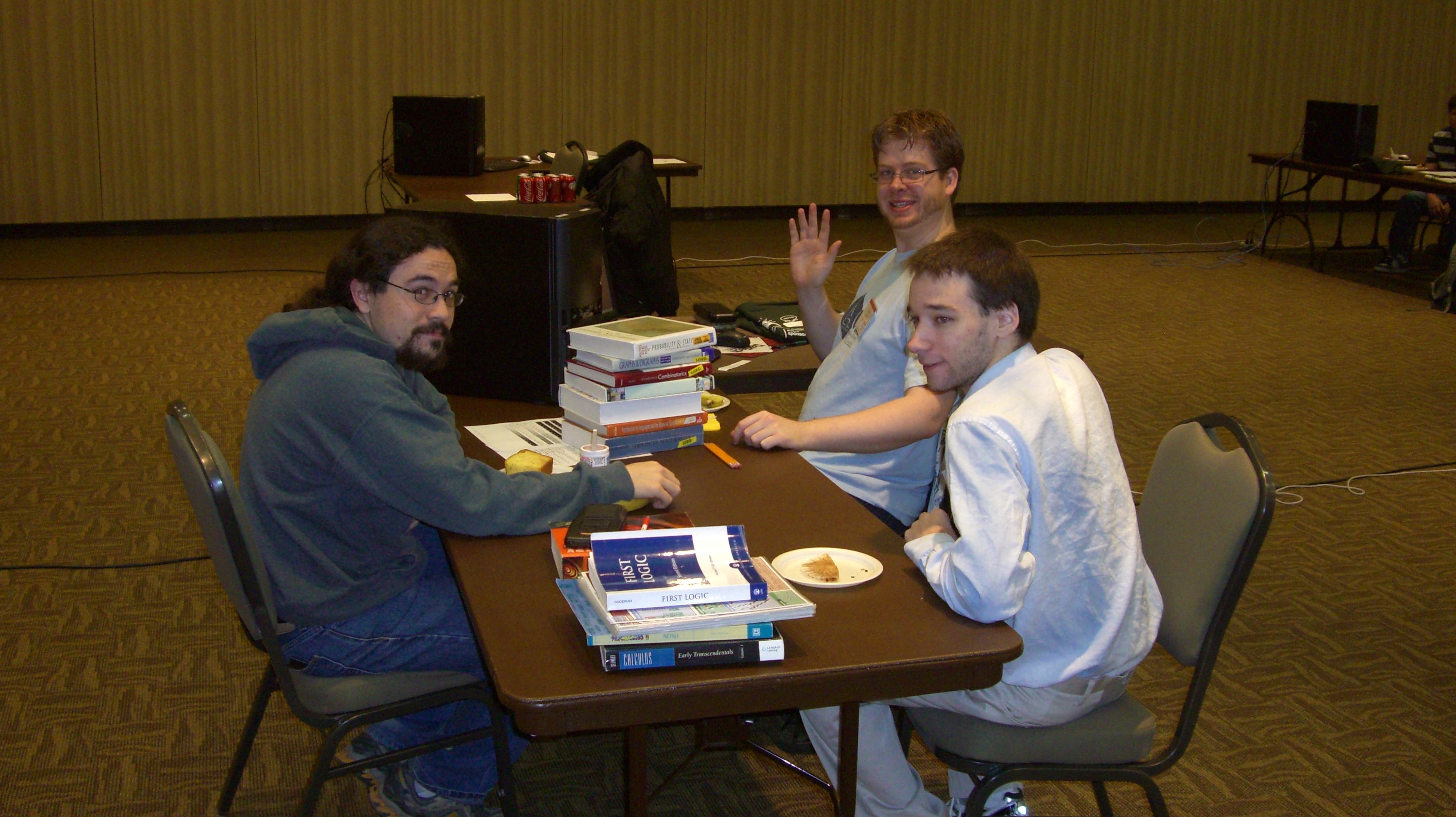
Team Pi Rho
From left to right: Abram Jackson,
Austen Dicken, Davin Loegering
The NDSU Computer Science Department hosted a site competition for the ACM North Central North America Regional Programming Contest on November 6th, 2010. Eight teams from NDSU, MSUM, and Concordia college competed against 217 other teams at other competition sites in the region for the opportunity to compete in the World Finals in Sharm el-Sheikh, Egypt.
NDSU Team Pi Rho, consisting of members Austen Dicken, Abram Jackson and Davin Loegering, scored 26th in the region. NDSU teams Bison (Jeremy Dobler, Nick Larson and Lawrence Anderson) and Dacodas (Cesar Ramirez and Ramesh Singh) also competed. Richard Rummelt was the coach for the three teams.
Pictures for the event are posted online, along with the Regional Standings and the Contest Problems.
June 2009
Dr. Jun Kong and Dr. Weiyi Zhang for each won a very competitive ND EPSCoR Infrastructure Improvement Program -- Collaborative Seed Pilot Program award.
According to the letter(s) of award, thirteen proposals requested
$1.1 Million, while three awards totaling $207,400 were funded.
Dr. Jun Kong won a two-year award for $77,600 in collaboration with
colleagues at UT-Dallas.
Dr. Weiyi Zhang won a two-year award for $82,600 in collaboration
with colleagues at U of Sci & Tech, China.
May 2009
Dr. James Du was awarded the College of Science and Mathematics College Award
2009 Academic Year
It has been a year of minor growth and consolidation for the Computer Science department, with potential for future increases from a number of sources. Meanwhile it has been a 'year of assessment' as the department simultaneously underwent annual assessment, program review, and accreditation self-study, the rare trifecta.
To begin the academic year we were joined by two new faculty. Dr. Juan Li from the University of British Columbia, specializes in Distributed systems, Semantic Web technologies, Information retrieval and knowledge discovery. Dr. Wei Jin from the State University of New York – Buffalo specializes in data mining, information retrieval, machine learning and bioinformtics
In September three graduate students were awarded North Dakota Space Grant Consortium research assistantships. Later that month NDSU was visited by former astronaut Colonel Al Worden from the Apollo 15 moon mission, who met with the students and their advisors to shake hands and pose for photos.
Towards the end of the Fall semester Dr. Yan Gu announced she was leaving for a position at Auburn University starting in January.
In November, Dr. Kendall Nygard traveled to China and met with university officials at several institutions with a view towards forming a new twinning agreement. In January, Dr. Dianxiang Xu also visited China as part of a joint NDSU and Campus Development Group delegation to plan for the Fergus Falls development scheduled for 2010.
Most recently, it has been announced that Dr. Anne Denton, along with Plant Science Professor Shahryar Kianian, has been awarded a $3.1M NSF grant for wheat genome research. This is among the largest grants ever won by a Computer Science faculty member.
NDSU students take second and fourth
in computer competition
The NDSU computer science department participated in the
Digi-Key Corp.’s Collegiate Computing Contest, “DKC3,”
on Oct. 17 in Thief River Falls, Minn. Two teams represented
NDSU. Dakodas won second place and Pi Rho placed fourth.
The University of Minnesota, Morris, won first place. The Dakodas won a $150 gift certificate for each team member and $1,800 for the computer science department. Bemidji State University placed third and NDSU’s Pi Rho team came in fourth. A total of 24 teams participated.
Dakodas members include Ryan Carlsrud, a junior from Tower City, N.D.; Nathan Ehresmann, a junior from Staples, Minn.; Robert J. Foertsch, a senior from Wyndmere, N.D.; and Jeong Woo Wee, a junior from South Korea. Pi Rho’s members include Christopher Grahn, a junior from Colby, Wis.; Abram Jackson, a junior from Valley City, N.D.; Dustin Kerber, a senior from Cooperstown, N.D.; and Joel Longanecker, a senior from Waseca, Minn.
Richard Rummelt and Adam Helsene coached the teams.
Du and Nygard receive grant
to secure wireless sensor networks
Xiaojiang “James” Du, assistant professor, and
Kendall E. Nygard, professor, both in the computer
science department, have received a three-year
$358,748 grant from the Army Research Office to
secure military wireless sensor networks.
In the project, “Designing Robust and Secure Heterogeneous Sensor Networks,” Du and Nygard will design effective and efficient secure protocols and algorithms for military sensor networks. A sensor network consists of a large number of tiny, smart sensor nodes that are deployed in a wide geographical area, and can provide unprecedented opportunities to sense, instrument, manage and control large environments.
In this project, Du and Nygard adopt a new and more realistic network model to study security issues in sensor networks. The model is called a Heterogeneous Sensor Network that consists of different types of sensor nodes with varying capacities. Du also received a research infrastructure grant from the Army Research Office in May 2007. This grant will be used to set up a large sensor network testbed that will be used for performance evaluations for the new project.
Wireless sensor networks have many applications in the military, such as battlefield surveillance, target tracking and security monitoring. Sensor networks are expected to have more and more applications in the military, and will become a critical component of the future digital battlefield.
As part of the project, Du and Nygard will train highly skilled undergraduate and graduate students with expertise of interest to the Department of Defense.
February 20, 2008
It was announced today that the NDSU Chamber of Commerce
Distinguished Professor
Award Committee has unanimously selected Dr. William "Bill" Perrizo,
professor of Computer Science,
as the recipient of the 2008 award.
The nomination written by the NDSU Computer Science department nomination committee and unanimously signed by the faculty of the department said, in part "Dr. Perrizo has served as a faculty member for thirty-four years, and throughout that time has consistently excelled and demonstrated leadership in teaching, research, and service."
In a letter to Perrizo, R.S. Krishnan, committee chair and associate vice president for academic affairs, wrote, "The committee was impressed with your distinguished record as an educator, and your long and exemplary service.
Dr. Donald P. Schwert, in a letter of support for the nomination wrote, "Dr. Perrizo's distinguished record of teaching and research, and of service to both NDSU and to the Fargo-Moorhead community, makes him particularly well credentialed for this award."
Dr. Perrizo will receive the recognition at the Chamber of Commerce of Fargo Moorhead Awards Luncheon, scheduled for noon Wednesday, May 21, at the Ramada Plaza Suites and Conference Center, Fargo.
January 2, 2008
Dr. Paul Juell passed away on Saturday, December 29th at Meritcare Hospital after a years-long battle with cancer. Paul's only brother died on December 26th, also of cancer.
Paul had a good Christmas with family, including his adopted son and his wife and children. Then late on Christmas day he was hospitalized, later
suffering seizures, and finally passing away comfortably.
Although we grieve the loss of a good friend and colleague, we must also
celebrate his life. The CS department organized an event at the Alumni
Center to recognize Paul in the fall of 2006 while he was able to attend.
The Paul Juell Scholarship Fund was set up at that time.
Paul continued coming to the office each day right up until the Christmas
break this fall, which demonstrates his courage and dedication to students
and those who were part of his life.
The family has asked that in lieu of flowers, donations be made to the
Paul Juell Scholarship Fund (c/o the NDSU Development Foundation, PO Box
5144, Fargo, ND 58105).
Mon, 5 Nov 2007
The department programming competition teams ‘swept’ the eighth annual Digi-Key Collegiate Computing Competition (DKC³) on Friday, October 19. We were represented by two teams of four students each and both won by a wide margin. This is the first time in the history of the DKC³ that any university has won both first and second place. The department congratulates the students, listed below, and their coach, Richard Rummelt.
The competition included Bemidji State University, St. Cloud State University, University of Minnesota - Duluth, University of Minnesota - Morris, University of North Dakota, Concordia College, and Mayville State University as well as NDSU.
Team ‘Pi Rho’ (First Place) won $200 for each team member, $3000 for the Computer Science Department, and a huge brass trophy.
Adam Helsene
Dustin Kerber
Eric Odegaard
Evan Braaten
Team ‘Dacodas’ (Second Place) won $150 for each team member and $1800 for the Computer Science Department.
Aaron Feickert
Abram Jackson
Amar Nishant Singh
Robert Foertsch
The competition was held in Thief River Falls, MN at the Digi-Key corporate headquarters. Representatives of the Digi-Key corporation's Information Technology department then visited NDSU on Friday, November 2 where they presented the trophy / prize money as well as recruited for two permanent positions and student internships.
May 1, 2007
Brian M. Slator, a long time Professor within the Department, has been
selected as the first Department Head. His service will commence on July
1, 2007. Prior to that date, the Department was directed by a Department
Chair. Unlike Chairs, Heads serve an indefinite term.
The Department has had a very successful, productive two years (2005,
2006) by almost any measure. When one considers that the Department
spent these two years with at least two (often three) vacant positions,
the results are even more impressive.
Research
The eleven tenure-track faculty who submitted brag sheets had a total of
136 fully refereed publications during 2005-06. Particularly gratifying
is the split between the six tenured faculty who had 76 refereed
publications and the five non-tenured faculty who had 60 refereed
publications. Ten distinct faculty published during 2005-06. The faculty
submitted 88 research proposals during these two years (some are counted
more than once since more than one Department faculty member
participated). Only 12 proposals were funded, but nine distinct faculty
submitted proposals during this two year period.
Service
The Department continues to be very active in service to the College,
University, and profession. Four faculty serve on a total of five
University Committees. Nine faculty served on College Committees for a
total of seventeen committees. Two faculty serve as associate editors of
journals. Six faculty serve as reviewers of grant proposals and/or
publications.
Teaching
In 2005-06, the Department taught 19.25 FTE. In 2006-07, we are should
exceed that FTE production. The Department had the largest graduate
program in the University in both years.
In the past two years, forty-three bachelor's level students, four
certificate level students, forty-eight M.S. level students, and eight
Ph.D. level students were graduated. At the graduate level, seven
faculty advised at least one of these students.
The Department continues to be a leader in distance education. We offer
a Graduate Certificate in Software Engineering entirely through distanced
education. While we have not advertised the program, its numbers slowly
are increasing.